Meta's Immersive Web SDK for WebXR reaches 1.0
Meta's open-source WebXR framework, built on Three.js, hits 1.0 with agent tools that can test on a real Quest, a scene editor shared with your agent, and gaze-and-pinch input for Meta VR Glasses.
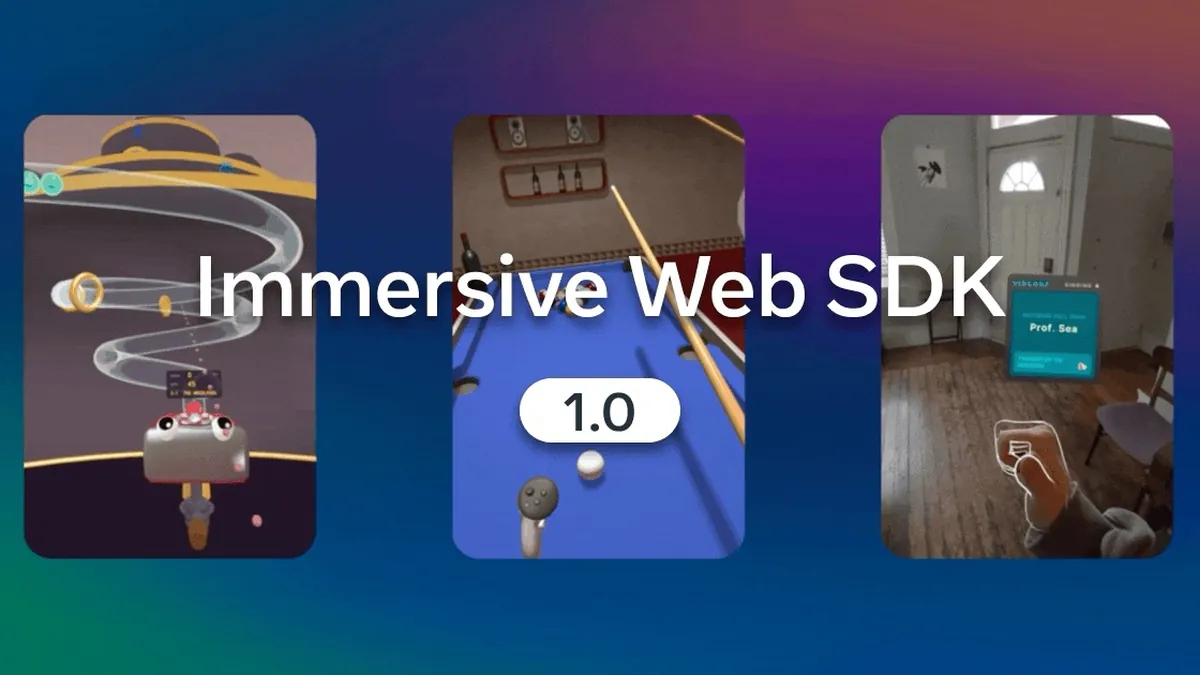
Meta has released Immersive Web SDK (IWSDK) 1.0, the newest version of its open-source framework for building immersive experiences on the web. It first launched at Meta Connect 2025 and is built on Three.js with an Entity Component System.
New projects come with the basics wired in: one-hand, two-hand and distance grabbing, locomotion with teleport and jumping, Havok physics running in its own Web Worker, spatial UI written in an HTML-like markup called UIKitML, and mixed reality features such as plane detection, anchors and depth occlusion. Apps are websites first, so they open from a link in a desktop browser and become immersive when a headset is available.
IWSDK is built around coding agents. Every project ships with an MCP server and agent skills. New in 1.0, an agent can run and test your app on a Quest plugged into your computer, not just in the desktop emulator. The new Agentic Scene Composer is a visual editor that you and your agent both work in, on the same scene.
1.0 is also ready for Meta VR Glasses, which ship in spring 2027. Gaze acts as a pointer and a pinch selects, so existing controller and hand-ray interactions carry over with one line of configuration.
To start a project, run npm create @iwsdk@latest. If you're on IWSDK 0.5, update all the packages together and check the changelog.
Why it matters: it's a free, web-first way to reach Quest and Meta's glasses, with physics and interactions ready-made. Agents can change your project directly, so keep it in version control.
Source: Meta Horizon OS developer blog (official post, opens in a new tab)